
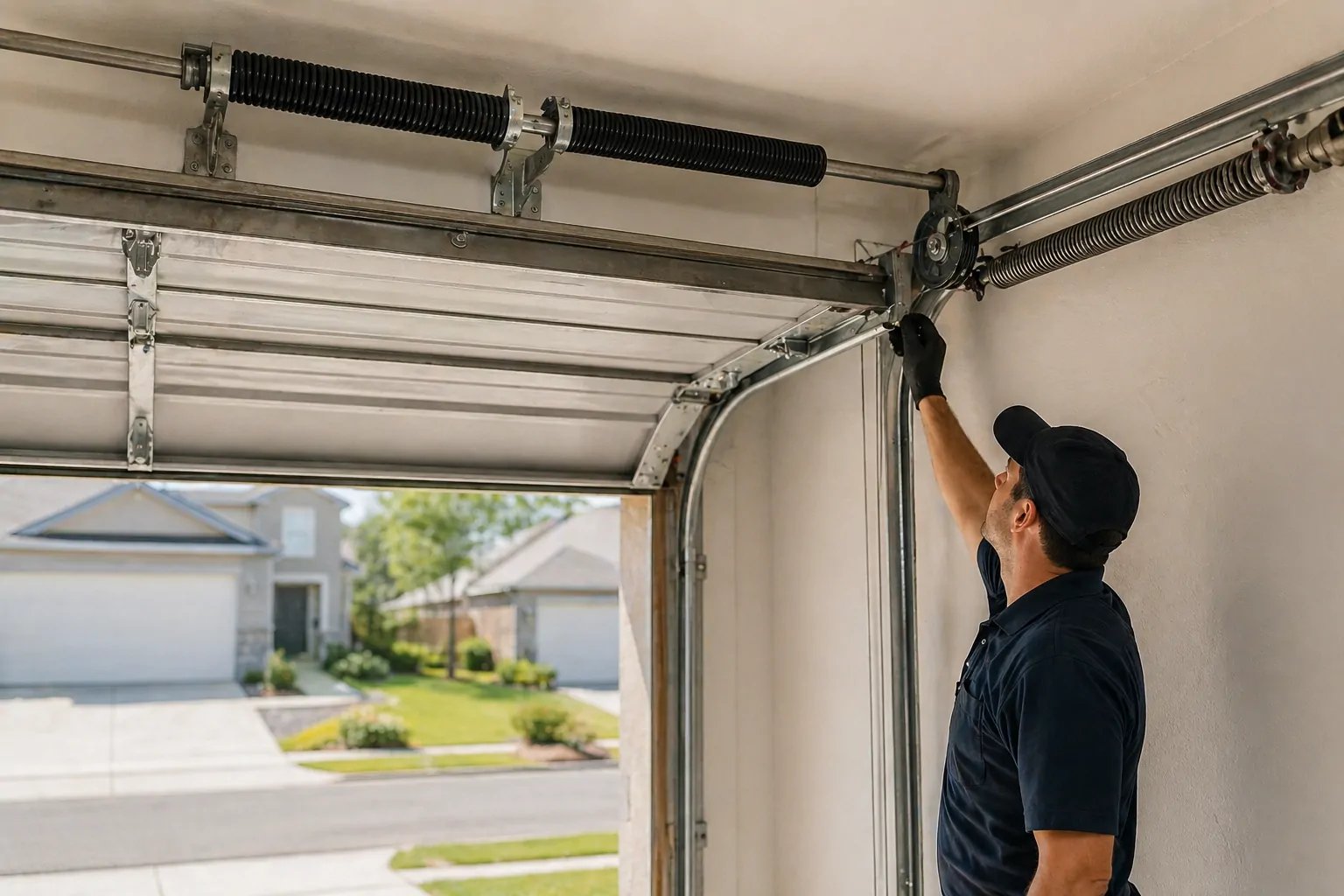
Torsion vs Extension Springs: Which One Is Better for Your Garage Door?
Your garage door seems heavier than usual. It moves unevenly or hesitates before opening fully. In most cases, the springs are the root cause. Springs are the core of how your garage door functions every single day. They carry the weight of the door and make smooth, controlled movement possible.
There are two main types used in residential systems: torsion and extension springs. Each works differently and suits different situations. Choosing the right one affects safety, performance, and long-term cost.
What Are Garage Door Springs and Why Do They Matter?
Garage door springs store mechanical energy and release it to help lift the door every time you open it. Without springs, your opener motor would struggle to move the door at all. Springs also control how smoothly and safely the door descends when closing.
A worn or broken spring throws the entire system off balance immediately. The door becomes too heavy, moves unevenly, or stops working altogether. Understanding torsion vs extension springs gives you the knowledge to choose the right system and recognize problems before they become dangerous failures.
What Are Torsion Springs?
Torsion springs are the more advanced spring system used on residential garage doors today. They work by storing energy through twisting or torque rather than stretching. Most modern homes and heavier doors use torsion springs because of their superior performance and longer service life.
How Torsion Springs Work
Torsion springs mount horizontally above the garage door opening on a metal shaft. When the door closes, the spring winds up and stores energy. When you open the door, that stored energy unwinds and helps lift the door smoothly. The twisting motion gives the system precise, balanced control throughout the entire range of movement.
Where They Are Installed
Torsion springs sit directly above the closed garage door, centered along the horizontal shaft. One or two springs may be used depending on the size and weight of the door. Heavier and wider doors typically require two torsion springs for proper balance. The springs connect to cables that run down to the bottom corners of the door on each side.
Key Benefits of Torsion Springs
- Smooth operation: Torsion springs deliver consistent, controlled movement with far less vibration than extension systems.
- Longer lifespan: A standard torsion spring lasts between 15,000 and 20,000 cycles. That is roughly two to three times longer than most extension springs.
- Better balance: The centralized mounting provides even weight distribution across the full width of the door at all times.
Potential Drawbacks
- Higher upfront cost: Torsion springs cost more to purchase and install than extension springs, which can be a barrier for budget-conscious homeowners.
- Requires professional installation: The tension involved in torsion spring installation is extremely dangerous. This is not a DIY job under any circumstances.
What Are Extension Springs?
Extension springs are the older and simpler of the two spring systems. They have been used on residential garage doors for decades and are still found on many lighter, older doors throughout South Florida. They work through stretching rather than twisting to generate lifting force.
How Extension Springs Work
Extension springs stretch and contract to store and release energy. When the door closes, the springs stretch outward under tension. When the door opens, that tension releases and the spring contracts, pulling the door upward through a cable and pulley system. The force is generated by the length of the stretch rather than the torque of a twist.
Where They Are Installed
Extension springs are mounted horizontally along the upper sides of the door tracks, one on each side. They run parallel to the horizontal track sections and connect to the door through a system of cables and pulleys. Because they are mounted on both sides, any imbalance between the two springs affects how evenly the door travels.
Key Benefits of Extension Springs
- Lower cost: Extension springs are less expensive to purchase and install, making them a common choice for older homes or budget repairs.
- Simpler system: The basic mechanics are easier to inspect visually, and replacement parts are widely available.
Potential Drawbacks
- More wear and tear: Extension springs stretch and contract with every cycle, which puts more stress on the coils and shortens their lifespan compared to torsion systems.
- Safety risks if broken: A snapped extension spring can fly off with significant force if a safety cable is not installed. This creates a serious hazard for anyone nearby.
Torsion vs Extension Springs: Key Differences Explained
Here is a clear side-by-side comparison of torsion vs extension springs across the factors that matter most to homeowners:
| Feature | Torsion Springs | Extension Springs |
|---|---|---|
| Lifespan | 15,000 to 20,000 cycles | 7,000 to 10,000 cycles |
| Safety | Contained on a shaft, lower injury risk | Can snap and fly if safety cable is absent |
| Cost | Higher upfront investment | Lower upfront cost |
| Maintenance Needs | Less frequent, longer intervals | More frequent checks needed |
| Performance | Smoother, more balanced operation | Adequate for lighter doors |
| Installation | Professional only | Professional strongly recommended |
Which Garage Door Spring Is Right for Your Home?
The right spring depends on your door type, budget, and long-term goals. There is no single answer that fits every home. Here is a breakdown by situation to help you decide.
For Heavy or Modern Garage Doors
Heavier doors made from steel, wood, or insulated materials need the superior lifting power of torsion springs. They handle more weight with better balance and cause far less strain on the opener motor over time.
For Budget-Friendly Solutions
Extension springs work well for lighter, single-car garage doors when upfront cost is the priority. They are a practical option for older homes where the door and hardware are already designed around that system.
For Long-Term Durability
Torsion springs deliver a significantly longer service life. Homeowners planning to stay in their home long-term will spend less on replacements and repairs over the years by investing in torsion springs from the start.
For Safety and Quiet Operation
Torsion springs are the clear choice for households that prioritize safety and quiet performance. Their contained design reduces the risk of injury if a spring breaks and produces far less noise during daily operation.
Cost Comparison: Torsion vs Extension Springs in Florida
| Cost Factor | Torsion Springs | Extension Springs |
|---|---|---|
| Spring Cost (per spring) | $75 to $150 | $30 to $75 |
| Labor Cost | $100 to $200 | $75 to $150 |
| Total Repair Cost (estimate) | $175 to $350 | $100 to $225 |
| Average Lifespan | 15,000 to 20,000 cycles | 7,000 to 10,000 cycles |
| Replacement Frequency | Every 7 to 12 years | Every 4 to 7 years |
| Long-Term Value | Higher | Lower over time |
Prices vary based on door size, spring type, and whether emergency service is required. A Plus Mega Garage Doors provides clear, upfront estimates before any work begins so there are no surprises on your final bill.
When Should You Replace Your Garage Door Springs?
Springs do not last forever and waiting too long puts your safety at risk. Knowing when to act protects both your family and your garage door system. Here are the key signs and situations that call for spring replacement now.
- The door feels noticeably heavier when lifted manually
- You hear loud creaking, grinding, or a sudden snap during operation
- The door moves unevenly or one side rises higher than the other
- You can see visible rust, gaps, or deformation on the spring coil
- The opener strains, slows down, or reverses unexpectedly
- Your current springs have exceeded their expected cycle count
- You are upgrading from extension springs to a more reliable torsion system
- A spring has already broken once and the matching spring is the same age
Replacing both springs at the same time is always recommended. If one has worn out, the other is close behind.
Can You Replace Garage Door Springs Yourself?
This is one home repair that carries serious injury risk for untrained individuals. Garage door springs are wound under extreme mechanical tension. A torsion spring holds enough stored energy to cause severe injury if it releases suddenly during handling. Extension springs can snap and fly at high speed if mishandled.
Every year, homeowners suffer broken bones, lacerations, and worse attempting DIY spring replacement. Proper garage door spring replacement requires specialized winding tools, calibrated tension settings, and hands-on training. Protect yourself and call A Plus Mega Garage Doors for safe, professional spring installation every time.
Not Sure Which Spring Is Right for Your Garage Door?
Let A Plus Mega Garage Doors help you decide. Our experienced technicians assess your door, weight, and current setup to recommend the right system for your home. Whether you need torsion vs extension spring guidance, a replacement, or a full inspection, we are ready to help fast. We serve Fort Lauderdale and all of Broward County. Free estimates are available on every call.
0791 NW 53rd St Suite 113, Sunrise, FL 33351
(954) 965-9988
guevaragaragedoors@gmail.com