
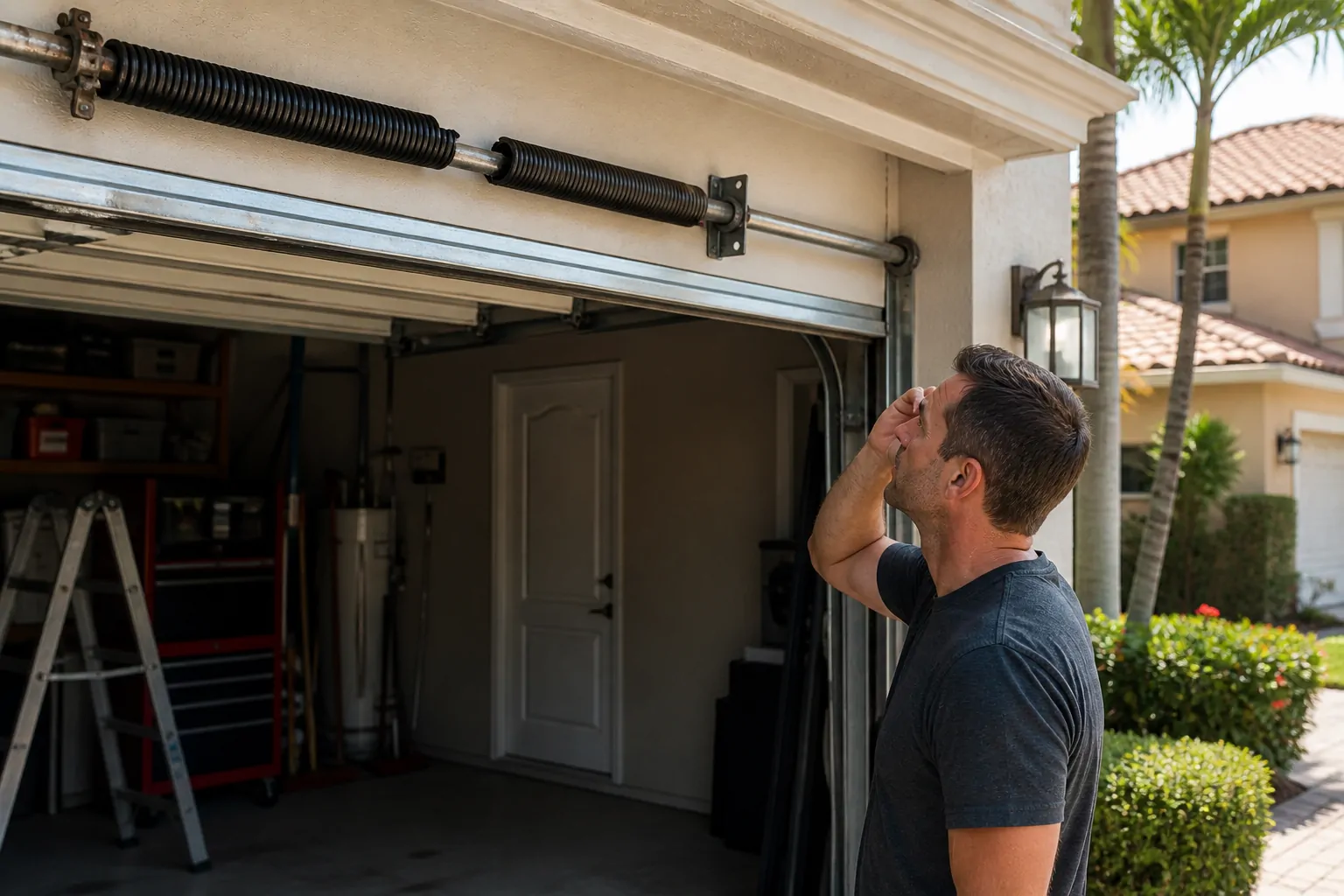
Why Garage Door Springs Break and How to Prevent It
You hear a loud snap from your garage and the door refuses to open. It is one of the most disruptive things that can happen on an ordinary morning. A garage door spring break is more common than most homeowners expect, and it almost always feels sudden. But in reality, springs wear down gradually over months and years before they finally give out.
Most failures are preventable with the right care and timing. This blog will walk you through the real causes of spring failure and give you practical tips to stop it from happening to your door.
What Happens When a Garage Door Spring Breaks?
Springs are responsible for carrying nearly all of your garage door’s weight during every open and close cycle. There are two main types used in residential systems. Torsion springs mount above the door and use torque to lift it. Extension springs run along the sides of the track and stretch to generate force.
When a garage door spring break occurs, the door loses its counterbalance entirely. The opener cannot compensate for the missing support. The door becomes too heavy to lift, moves unevenly, or drops suddenly. A broken garage door spring makes the entire system unsafe to use until it is professionally repaired.
Why Do Garage Door Springs Break?
Springs do not break randomly. There are clear and consistent causes behind almost every spring failure. Understanding them gives you the power to act before the damage is done.
Normal Wear and Tear Over Time
Most garage door springs are rated for around 10,000 open and close cycles. A household that uses the door four times a day will reach that limit in roughly seven years. Once a spring exceeds its cycle rating, failure becomes increasingly likely with every use.
Rust and Corrosion
Moisture is one of the leading causes of premature spring failure in South Florida. Rust weakens the coils from the inside and increases friction during operation. Corroded springs snap far sooner than their rated cycle count because the metal loses its structural integrity gradually.
Lack of Regular Maintenance
Springs that go without lubrication or inspection wear down much faster than maintained ones. Friction builds up between the coils and accelerates damage. Skipping routine garage door maintenance means small problems grow into a full garage door spring break without any warning.
Extreme Heat and Humidity in Florida
Florida’s climate puts unique pressure on garage door springs. Heat causes the metal to expand and contract repeatedly throughout the day. Over time, this thermal stress weakens the coil structure. Combined with high humidity, the breakdown of spring material happens faster than in cooler, drier climates.
Poor Installation or Low-Quality Springs
Springs made from inferior materials fail well before their rated lifespan. Improper installation also creates uneven tension that stresses the coils from the first cycle. Choosing a licensed professional and quality replacement springs is essential for long-term reliability.
Top Signs Your Garage Door Spring Is About to Break
Springs rarely fail without giving some warning first. Knowing what to look for gives you time to act before you end up with a door that will not open. Watch for these garage door spring break warning signs.
Door Feels Heavier Than Usual
When a spring weakens, it loses its ability to fully counterbalance the door’s weight. The opener works harder and the door feels unusually heavy when lifted manually. This is one of the earliest and most reliable warning signs that spring failure is approaching.
Slow or Uneven Door Movement
A door that moves slower than usual or rises unevenly on one side is signaling a spring problem. Uneven movement means one spring has weakened more than the other. The imbalance puts extra stress on the tracks, cables, and opener motor during every cycle.
Visible Wear or Rust on Springs
Take a close look at your springs. Heavy rust, discoloration, or thinning of the coil material are all signs of advanced wear. Visible damage means the spring is operating well past safe condition. Replacement should happen immediately before a full garage door spring break occurs.
Loud Noises During Operation
Squeaking, grinding, or popping sounds during door movement often come from dry or corroded springs under strain. These noises mean the metal is working harder than it should with every cycle. Lubrication may reduce the sound temporarily, but the underlying wear still needs professional attention.
Gaps Forming in the Spring
A visible gap or separation in the coil is a sign that the spring has already partially broken or is on the verge of snapping. Once a gap appears, failure is imminent. Stop using the door and call a technician right away.
How to Prevent Garage Door Spring Breaks
Prevention is always less expensive and less stressful than an emergency repair. A few consistent habits extend the life of your springs significantly and reduce the risk of a sudden garage door spring break.
Schedule Routine Garage Door Maintenance
Regular maintenance keeps every component in good working order. A trained technician checks spring tension, condition, and balance during each visit. Catching developing issues early prevents them from turning into a full spring failure.
Lubricate Springs Regularly
Apply a silicone or lithium-based lubricant to your springs every three to six months. Lubrication reduces friction and slows the rate of wear on the coils. It also helps prevent rust from forming in humid Florida conditions.
Replace Springs Before They Fail
If your springs are approaching the end of their rated cycle life, replace them proactively. Waiting for a spring to snap always costs more in the long run. Planned replacement on your schedule is far less disruptive than an emergency breakdown.
Balance and Safety Testing
Test your door’s balance monthly by disconnecting the opener and lifting the door to the halfway point. If it does not stay in place, the spring tension needs adjustment. Regular balance testing reveals spring problems before they reach the breaking point.
Annual Professional Inspection
Garage door maintenance in Fort Lauderdale should include a professional inspection at least once a year. A licensed technician identifies wear patterns, adjusts tension, and recommends timely replacement before a garage door spring break disrupts your day.
How Long Do Garage Door Springs Last in Florida?
Most garage door springs are designed to last between 7 and 10 years under normal residential use. In Florida, that timeline can shorten noticeably. High humidity accelerates rust and corrosion on the metal coils. Intense heat causes repeated expansion and contraction that weakens the spring material faster than in cooler climates.
Homeowners who use their garage door more than four times a day may see springs wear out closer to the five or six year mark. Routine lubrication and annual inspections help push the lifespan toward the higher end of the range even in South Florida’s demanding conditions.
Can You Fix a Broken Garage Door Spring Yourself?
Replacing a garage door spring yourself is not recommended and carries a serious risk of injury. Torsion springs are wound under extreme mechanical tension that can release violently if mishandled during removal or installation. Extension springs can snap and fly at high speed without proper safety cables in place. Broken bones, lacerations, and eye injuries are common outcomes of DIY spring attempts.
Proper garage door spring repair and garage door spring replacement require specialized winding tools, calibrated tension settings, and professional training. The money saved on labor is never worth the physical and financial cost of an injury. Always call a licensed technician.
When Should You Replace Your Garage Door Springs?
Knowing when to replace springs before they break completely saves you from a sudden and costly emergency. Several situations point clearly to replacement being the right call now.
- Frequent Repairs Needed: If your springs have required adjustment or repair multiple times in a short period, they are nearing the end of their reliable service life. Continued repairs become more expensive than a full replacement.
- Door Becomes Unstable: A door that moves unevenly, slams shut, or struggles to stay balanced is telling you the springs can no longer do their job correctly. Instability is a safety risk that replacement resolves immediately.
- Springs Near End of Lifespan: If your springs are seven or more years old and approaching their rated cycle count, proactive replacement is the smart move. Do not wait for a garage door spring break to force your hand.
- Upgrading to a Better System: If you currently have extension springs and want the improved performance, safety, and lifespan of torsion springs, replacement is the right time to make that upgrade with a professional installation.
Prevent a Garage Door Spring Break Before It Happens
Do not wait for a loud snap to remind you that your springs need attention. A Plus Mega Garage Doors offers professional inspections, tune-ups, and emergency repair across Fort Lauderdale and all of Broward County.
Staying ahead of a garage door spring break is simple with the right maintenance partner. Contact us today and we will keep your door running safely all year long.
0791 NW 53rd St Suite 113, Sunrise, FL 33351
(954) 965-9988
guevaragaragedoors@gmail.com