
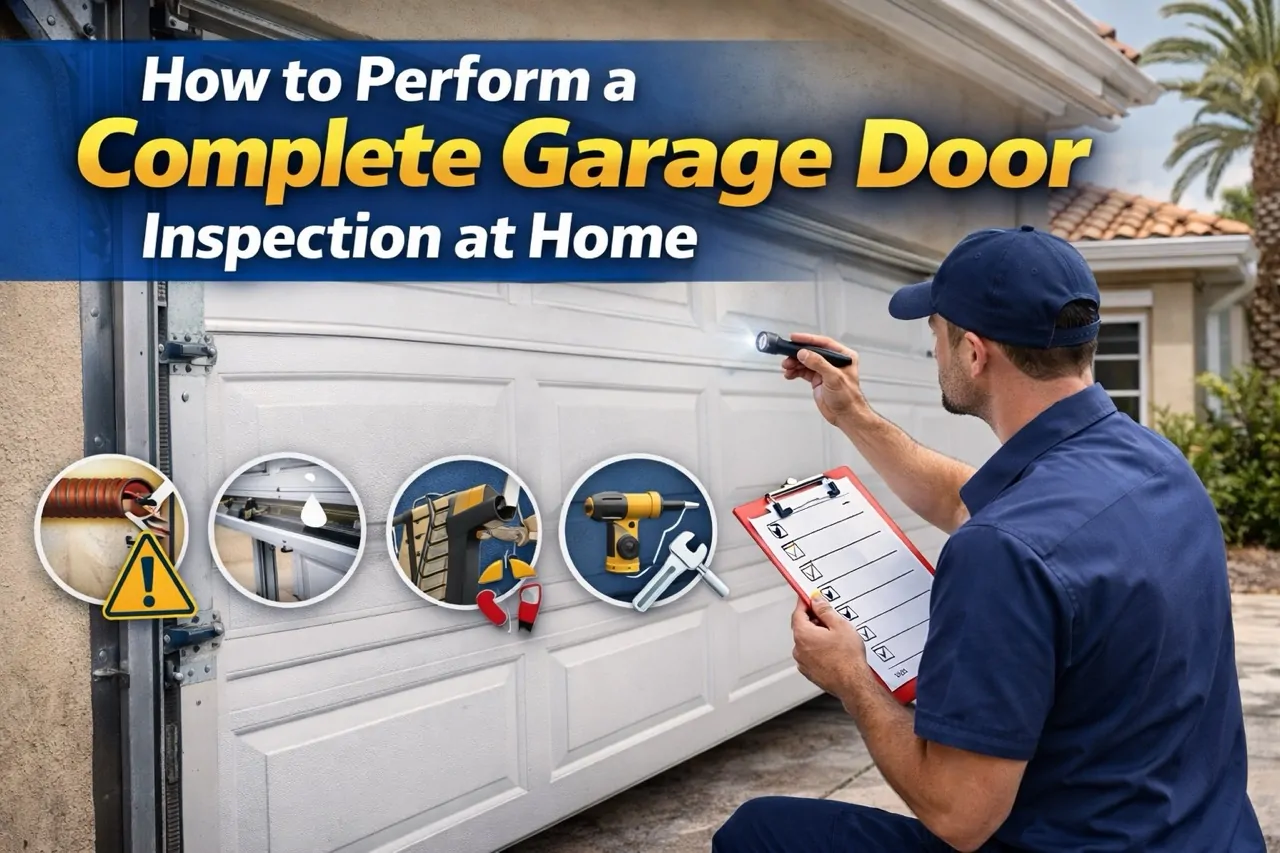
How to Perform a Complete Garage Door Inspection at Home
Regular garage door inspection protects South Florida homeowners from costly repairs and dangerous malfunctions. Your garage door operates multiple times daily facing unique challenges including intense heat, high humidity, and salt air exposure. Additionally, storm damage from hurricanes and tropical weather creates specific maintenance needs for regional properties.
A thorough garage door inspection helps prevent unexpected breakdowns, enhances safety, extends the door’s life, and avoids costly repairs . A Plus Mega Garage Doors brings over 20 years of expertise helping South Florida families maintain safe, reliable garage door systems through professional inspections and preventive maintenance programs.
Check Garage Door Balance and Alignment
Disconnect the opener by pulling the red release cord and lift the door halfway. A properly balanced door stays in position without falling or rising when released midway. If the door does not remain open, the garage door may be out of balance. Unbalanced doors strain motors and springs causing premature failure and expensive repairs. Additionally, imbalanced weight distribution creates uneven wear on rollers, tracks, and hardware components. Regular garage door inspection identifies balance issues before they cause complete system failures requiring emergency service calls.
Inspect Rollers and Hinges for Wear
Inspect the rollers on your garage door for any signs of wear and tear. Nylon rollers typically tend to crack and chip, while steel rollers tend to slowly become bent out of shape. Look for rust development, cracks in nylon components, or wobbling rollers indicating bearing failure. Check the hinges on your garage door for any signs of damage and ensure all hinges are firmly attached. Loose hinges create operational noise and panel misalignment affecting smooth door movement.
Common symptoms of bad rollers include:
- Excessive noise during operation indicating worn bearings
- Jerky or uneven door movement suggesting roller damage
- Visible cracks or chips in nylon roller surfaces
- Rust or corrosion on metal roller components
Examine Garage Door Tracks
Inspect tracks for bends, obstructions, or misalignment. Check track alignment on both sides ensuring parallel positioning throughout vertical and horizontal sections. Look for dents, bends, or loose mounting brackets that compromise smooth operation. Use a flashlight to check for debris, rust, or bends and clean the tracks with a damp cloth and mild detergent. Avoid greasing tracks as this attracts dirt and debris. Regular garage door inspection catches track problems before they cause door derailment or motor strain.
Test the Auto-Reverse Safety Features
Place an object that is over 6 inches tall at the edge of the garage door so that it blocks at least one of the sensors. If the photo eye sensors are functioning correctly, the garage door should not close. Place an object that is at least 1.5 inches high at the edge of the garage door to test force reversal. The door should immediately reverse upon contact.
What to do if safety tests fail:
- Clean photo eye sensor lenses with soft cloth removing dust and debris
- Verify sensors are aligned and mounted no higher than 6 inches from floor
- Check for damaged wiring or loose connections affecting sensor operation
- Contact professional technician if problems persist after basic troubleshooting
Look for Signs of Spring or Cable Damage
Visually inspect your garage door opener’s lifting cables and look out for any broken or fraying strands. Check springs and cables for signs of fraying, rust, or breakage. Springs under high tension can break suddenly causing door collapse. Do not attempt to replace springs or cables yourself as this is a job for experts with the right tools and training. Professional garage door inspection identifies spring wear before catastrophic failure occurs. Call A Plus Mega Garage Doors immediately if you notice spring or cable damage preventing dangerous situations and property damage.
Inspect Weather Seals and Bottom Rubber
The long strip of rubber on the bottom of your garage door is meant to seal away any water, dirt, insects, etc. Check for cracks, tears, or gaps in weather stripping around door perimeters. Damaged seals allow water intrusion, pest entry, and energy waste through air leakage. Proper weather sealing maintains garage temperatures while protecting stored items from moisture and humidity. Regular garage door inspection catches seal deterioration before it causes significant problems requiring expensive replacements.
Listen for Unusual Noises During Operation
Unusual noises are often the first sign that something is wrong. Pay attention to sounds indicating potential problems requiring professional attention during your garage door inspection. Common noises and possible causes:
- Grinding noises can indicate misaligned tracks or worn rollers
- Scraping sounds may point to debris in tracks or rubbing components
- Squeaking or squealing often means moving parts need lubrication to prevent premature wear
- Popping or banging often signals a broken spring requiring immediate professional attention
Check Garage Door Opener Functionality
Test remote controls, wall switches, and keypads ensuring all operate reliably without delays or intermittent failures. Listen for strange sounds like grinding or squealing and make sure the door responds promptly without jerking during operation. Inspect opener mounting ensuring secure attachment to ceiling joists without excessive vibration during operation. Check backup battery functionality if equipped replacing batteries every 1-2 years for reliable emergency operation. Professional garage door inspection includes comprehensive opener diagnostics identifying problems before complete failures occur.
Lubricate Moving Parts (What & How)
Use a silicone-based spray or white lithium grease and avoid using WD-40 as it is a solvent that can strip away existing grease. Proper lubrication reduces friction, extends component lifespan, and ensures quieter operation during your garage door inspection routine. Parts requiring lubrication include:
- Roller bearings for smooth track movement
- Hinge pivot points reducing operational friction
- Spring coils preventing rust and ensuring proper tension
- Chain or screw drive mechanisms on opener systems
- Lock mechanisms for smooth key operation
Apply lubricant sparingly avoiding excessive buildup attracting dust and debris.
When to Call a Professional Garage Door Technician
Not all garage door inspection issues are DIY-friendly requiring professional expertise and specialized tools. Call a garage door technician immediately if the door is shaking, grinding, moving unevenly, won’t close or open fully, springs or cables look damaged, the opener makes strange noises, or safety reverse test fails.
A Plus Mega Garage Doors provides free estimates and fast repairs throughout South Florida communities. Our certified technicians handle complex problems safely including spring replacement, cable repair, and opener diagnostics. Based in Sunrise, we serve all Broward County with reliable, professional garage door inspection and repair services.
Keep Your Garage Door Running Smoothly Year-Round
Regular garage door inspection protects your investment preventing expensive emergency repairs and dangerous malfunctions. Schedule seasonal checks especially before hurricane season ensuring your door withstands severe weather safely. Professional maintenance identifies problems early when repairs cost less and prevent catastrophic failures.
A Plus Mega Garage Doors offers comprehensive garage door inspection services keeping South Florida families safe and secure. Contact our expert team today for professional inspections, maintenance programs, and reliable repair services.
Contact Us Today
Phone: (954) 965-9988
Office Address: 10791 NW 53rd St Suite 113, Sunrise, FL 33351
Email: guevaragaragedoors@gmail.com